
Recognition
Clients decide whether to trust a vendor from a Facebook page and a few photos. The brand had to do that work before any conversation started.
Founder case study · Dipolog City, Philippines
A business I built, and the systems that keep it running.
iBlast Photobooth is a local event-service business I run. It started as Street Booth — I rebranded it, designed the packages, built the booking workflow, and design a personalised print layout for every event I cover.
This is the case study where I can show the whole picture — because I made every decision in it.
Founder and operator. Brand, service packaging, client communication, layout design, event delivery, and marketing.
A service name is not a business. It needed an identity people recognised, offers they understood, and a process that didn't depend on remembering things.
A full rebrand, a ten-step booking workflow, a personalised design process, and a content system that turns finished events into marketing.
An operating brand with defined packages, consistent materials, and a repeatable process — booked across festivals, weddings, school and corporate events.
The challenge
Taking good photos at an event is the easy part, and the part everyone focuses on. The things that decide whether a client books you, and whether they recommend you afterwards, mostly happen before and after the event itself.
Clients decide whether to trust a vendor from a Facebook page and a few photos. The brand had to do that work before any conversation started.
Packages, pricing, and booking policy had to be simple enough to understand in a message thread, while still protecting the business.
Every booking has inquiries, payments, layout approvals, and logistics. Handling those ad hoc is how details get missed on event day.
Each event gets a custom layout — but every one of them still has to look like it came from the same business.
The rebrand
The original Street Booth identity was quiet — a thin camera-shutter icon and a light script wordmark. It read as tentative at exactly the moment a client is deciding whether you can be trusted with their event.
"Street Booth" described where we started, not what clients were buying. "iBlast" is shorter, easier to say across a crowded venue, and easier to spot on a print layout at thumbnail size. The bolder wordmark came from the same constraint: most people first see the brand on a phone, in a feed, at speed.
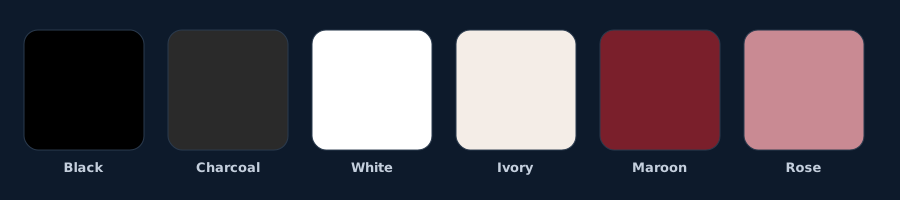
Brand palette: black, white, and maroon. Display font: Ahsing, used in the wordmark.
Event graphics designed for the page and for partner venues.
The booking system
Every booking follows the same path. Writing it down turned a set of habits into a process I can repeat under pressure, and hand to someone else if I need to.
Clients reach out on Facebook. Asking them to move to a phone call or an in-person meeting adds a step where bookings get lost. Instead the whole confirmation — form, policy, and down-payment details — happens in the thread they already started.
A real client journey
One complete booking, followed the whole way through.
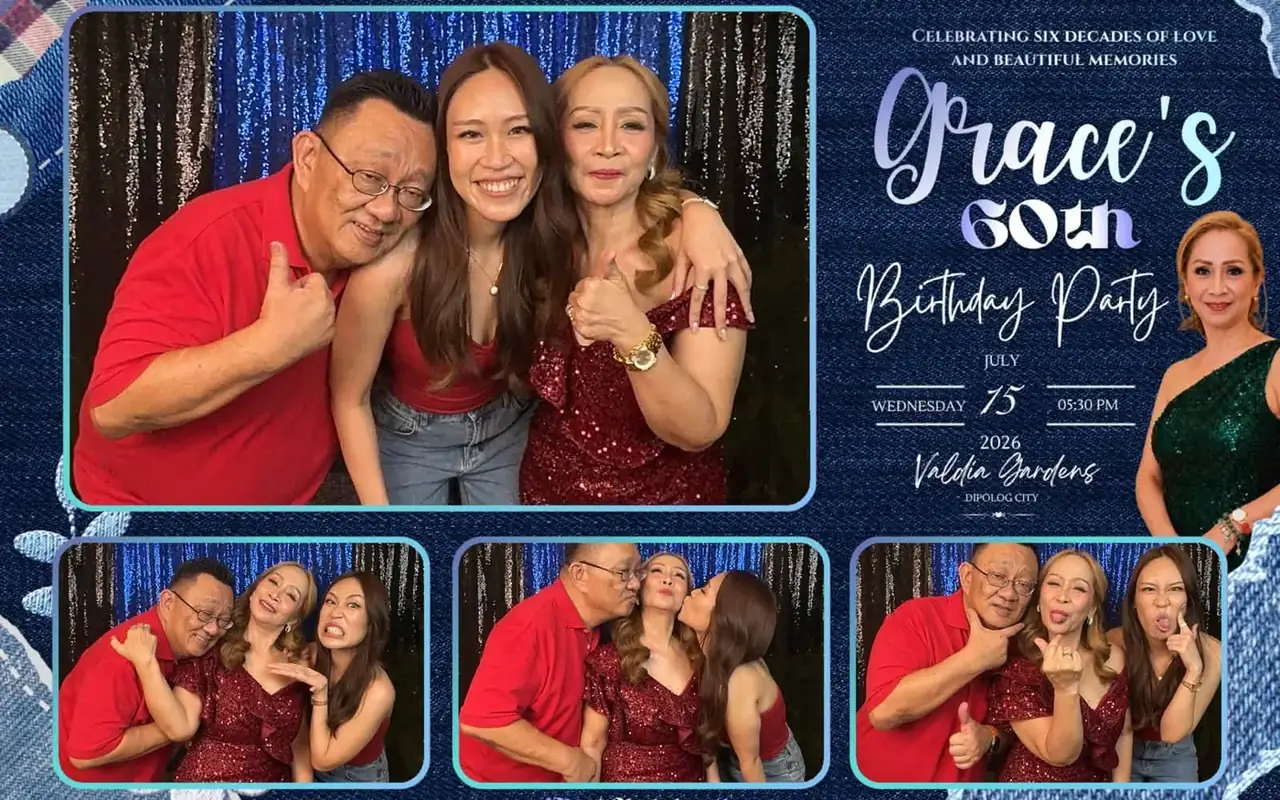
The client messaged the page to check availability, confirmed the booking, and paid the deposit. Closer to the date I followed up for what I actually needed: venue (Valida Gardens), start time (5:30 PM), theme ("Denim"), and any text for the template.
I based the layout on the invitation graphic she'd already had made, so the photobooth print matched the rest of the event rather than competing with it. I sent it over with an open offer to change colours, text, or photo placement.
Approved as delivered, printed on the night. After the event I asked directly whether it was alright to post the photos on the page, and only published once she said yes.
Event photos are the best marketing material a photobooth business has, and the easiest thing to misuse. Asking each client explicitly costs one message and means every image on the page is there with permission.
Layout design
Each booking gets its own print layout, matched to the theme, colours, and formality of the event. A selection across the range of work — public festivals, weddings, school and university events, corporate functions, and private celebrations.
Marketing
After each event I turn the photos, layouts, and reviews into content. It costs almost nothing and it is the main reason new clients arrive already knowing what they're getting.
Real posts from the iBlast Photobooth Facebook page — promotional announcements and post-event thank-yous.
Highlight reels edited and posted to the page.
"We loved the final layout, and everyone enjoyed the photobooth. Thank you for making the event more memorable!"
— Ma'am Lendy, birthday event
Outcome
iBlast went from a service idea to an operating local brand: defined packages, consistent materials, personalised deliverables for every client, and a booking process that runs the same way each time.
It has been booked across public festivals, weddings, university and school events, corporate functions, and private celebrations.
Those were other organisers' events; their promotional posters aren't my design work, so they aren't shown here.
iBlast is mine. It began as Street Booth; I rebranded it, and I have run it since — the name, the packages, the pricing, the booking process and the website are all decisions I made. It takes paid bookings across festivals, weddings, school and corporate events.
What I am not putting on this page is a booking count, a client count or a revenue figure. The only source for any of them would be me, and a number you would have to take on trust is the weakest thing I could put here. The events named on this page are the ones whose layouts, posters or posts I can show; I hold no published record beyond those, so no total is claimed. My rates are on iblastphotobooth.com.
The public site is a framework-free static build — one stylesheet, one vanilla JavaScript file, no build step, no JS libraries, with Google Fonts as its only external request. A separate invitation-only partner-programme page runs a referral registration that writes submissions through to a Google Sheet. I led the build, the testing and the deployment.
Running iBlast is the reason I approach client websites the way I do. I've felt what it costs when a booking process is unclear or a promotional post goes out two days late — not as a theory about conversion, but as an event that didn't get booked.